
All I want for Christmas is a functional COVID inquiry #1
Or rather, a functional effort to get us ready for next time & other crises

“As Alain Enthoven, a RAND economist and one of the whiz kids, once remarked to an Air Force general challenging his analysis: “General, I’ve fought just as many nuclear wars as you have.’’”
Connelly et al, The American Historical Review
“Science is a belief in the ignorance of experts”
Richard Feynman, Nobel Laureate in Physics who led the Challenge disaster investigation.
This blog is 3 mini blogs in one, each of which can be read independently. Scroll to whichever you think sounds relevant. Sequentially, they cover:
Intro: the COVID inquiry is, obviously, not fit for purpose, and is provably making major factual errors.
The COVID inquiry is dysfunctional for many of the same reasons the COVID response was dysfunctional. Ie, they are both symptoms of the same pathology.
Partly to substantiate points made there, I next include a brief case study from the origins of the rapid testing program, including making some of the first documents on it from inside 10 Downing Street public, which show how we were thinking about winter in the building and our efforts to (largely unsuccessfully) avert disaster.I believe the money for the COVID inquiry would be better used creating a pandemic preparation taskforce, and have it dealt with as a national security issue. I cover the report from Tony Blair and William Hague, specifically its biosecurity section which I co-authored with Luke Stanley, which outlines this.
When the Space Shuttle Challenger exploded, NASA didn’t hire barristers to adjudicate the tone of the control room. They hired Richard Feynman to find the O-rings that failed. The COVID Inquiry has done the opposite: it has effectively staffed a rocket investigation exclusively with lawyers. This is insufficient at best.
I was in 10 Downing Street during COVID19, joining in April 2020 when the Prime Minister was still away having nearly died. I was brought in as a scientist with no prior background whatsoever in government or politics.
I’m concerned enough by the COVID inquiry report to finally write directly about the COVID crisis response, and the British state’s refusal to reform in response to it.
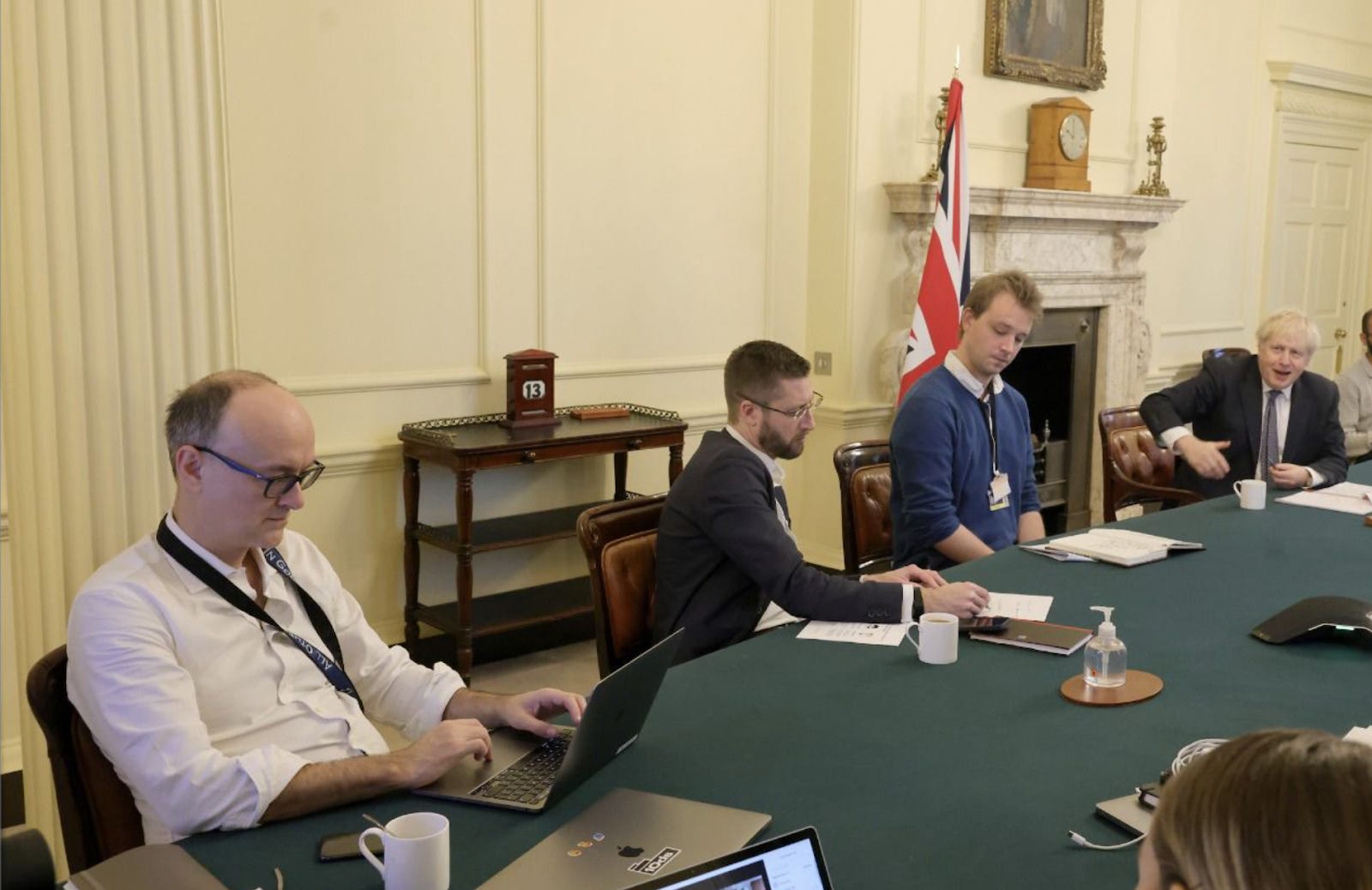
I was in the room for some of the most critical meetings.
What I see coming out of this inquiry bears little resemblance to what I saw with my own eyes inside 10 Downing Street throughout that crisis. I believe this is impeding our ability to do better next time.
People are rightly unhappy at how those of us in government fell short. The human cost of this disaster was horrific (I lost family to COVID) but next time may be worse. It is imperative we have a serious effort to channel that national experience into improvement, because the threat landscape is unfortunately worsening.
We do not yet have that serious effort, and the public deserve better. Please do not read this as an attack on the specific inquiry staff per se: I think the same process, with different people, would likely yield a similar result. Although this piece contains sharp criticisms, it is written in the hope of improving future crisis response, not assigning personal blame. My concern is with structures and incentives, not individuals.
First, a page of sharp words, then some analysis….
Among those I worked with closely inside No.10, there is a consistent view that the Inquiry’s current methods do not reflect what actually occurred or how decisions were made. I say this because, whilst it is apparent from the media that the view on this inquiry is very negative in some (most?) quarters, it is not so apparent that so many people who were actually there at the center of the crisis response think it bears little relation to reality and/or cannot see the point of it in its present form, when others, such as parliamentary inquiries and bespoke processes used in other countries, are available. They are not against, but in favour of, serious analysis of how to do better, but this inquiry is failing at that. Many, for a mix of understandable reasons, unfortunately do not feel it’s possible for them to say so publicly.
A core issue is that the inquiry is deeply flawed in ways that risk being counter‑productive — ie, it risks being anti-useful. It is actively drawing demonstrably wrong conclusions, including making strong conclusions on issues that are ultimately political value judgments best assessed by the public, as well as drawing strong conclusions on issues that one will never be able to have confidence on. It is blocking the space that should be occupied by the vitally needed effective process to get us ready for next time. I personally think the way it is being conducted is selective to the point of being actively misleading, and that it sometimes seems to be a pursuit in search of evidence to fit conclusions convenient to the power structures and networks that it arises from and that those conducting it will return to upon completion of it.
The system’s incentives appear aligned more with internal process preservation than with the rapid learning required after a national crisis.
It is simply not plausible to me that the inquiry can be so selective in its approach to evidence and witness selection, and so consistent in the direction of its misunderstandings, and yet also be the result of a sufficiently competent, intellectually open minded, and impartial process to warrant public confidence. Random errors scatter. These errors do not. They point in one direction: away from institutional responsibility and toward a familiar list of convenient villains.
The extensive and major errors, including on science, made in the inquiry report have been widely highlighted. These critiques come from leading mathematicians, science journalists, those with differing political views not well considered by the inquiry, senior members of the judiciary, and those who, like myself, saw the crisis from inside the very center of the British state. For example:
A leading mathematician at Bristol, Oliver Johnson, has spoken extensively about this (see here for a blog - “the COVID Inquiry was published, and frankly there was some pretty shocking stuff in there.”). He highlights how core documents relied on by the inquiry say the opposite of what they cite them as saying, and highlights the errors in inference from mathematical/modelling data they make.
Tom Whipple in the Times has covered how the inquiry is focussing on issues where confidence can never be high [see here]. He says “They are the things about which we know the least……Today, confident people with confident maths can explain just how many millions lockdowns saved — while often confidently ignoring that their equations assume people would, unless mandated by a government, go about their lives as usual while thousands died in hospital car parks. We can’t say that 23,000 would have been saved by an earlier lockdown.”
This by Christopher Snowden is very good on the rewriting of the scientific ‘evidence’, in which claims made at the inquiry are directly contradicted by the scientists own live television appearance at the time (for example on herd immunity).
Dominic Cummings has produced an extensive list of the severe omissions and mistakes here and here - I agree with what he has written, it matches my own experiences very closely. I cover some below.
Lord Sumption, former Supreme Court justice, has written a more politely worded but equally devastating view of it in the Sunday Times [extract here, full here], highlighting how its conclusions are based on ‘a remarkably limited range of material’ and how the report ‘is riddled with solemn warnings about methodological errors and omissions which the author then proceeds to commit herself’ and that ‘one is bound to question whether the public is getting value for money’.
There is little point listing all the deep flaws and errors here.
Let’s instead consider not just whether the Inquiry is dysfunctional, but why.
The COVID inquiry mirrors the COVID response itself
If you want to understand what went so badly wrong during COVID and how to do better next time, you could make some progress by considering what has gone so badly wrong in the inquiry into what went so badly wrong during COVID. There are remarkable similarities, which point to a deeper truth about how the modern bureaucratic-legal state is structurally incapable of effective understanding, action, and learning. Further, if the same pathologies appear in both the crisis and the inquiry into the crisis, then those pathologies cannot be explained by the personalities of that moment. They are structural features of the modern bureaucratic-legal state.
The core issue is that the inquiry is itself a striking manifestation of the very problems it should be trying to address, whilst simultaneously being deeply unclear about what it is actually trying to address.
And that’s the first similarity. The inquiry has itself said there was a lack of clarity on the objective at points, yet it itself appears unclear what it is actually for. Is it an attempt to write an official history of what went wrong in this specific instance (the people and specific context)? Or is it an attempt to understand what went wrong structurally (why things still in place now went wrong, like the SAGE process, procurement rules, civil service etc)? Or is it an attempt to say how to deal with another pandemic? Or is it an attempt to understand, and improve, how the modern government deals with crises more broadly at a structural level? Is it all of them? If it is the first (a history), it is the most expensive history book ever written. And if it is the latter two (a solutions manual), it is deeply failing. And each of those questions requires a different skillset. I go into this in the final section.
But there are far more pervasive similarities. I’ll sketch a few of the most important ways in which the Inquiry has replayed the failures of the COVID response.
Firstly, COVID was plagued by slowness of action. And, 5 years on from COVID, almost nothing of substance has changed. The inquiry has taken years, at huge expense, to conclude what people would conclude, rightly or wrongly, from the dominant perspective of news coverage and op-eds at the time (as Lord Sumption effectively says). The British state’s response to a crisis plagued by slowness of action has been characterised by…. slowness of action. The COVID inquiry has literally taken longer than the entire COVID response, and is only 2/10 modules complete.
The Inquiry has reproduced one of the pandemic’s most lethal failures: the belief that process is a substitute for timely action.
Secondly, perhaps the single most important parallel is this: during COVID, seniority/empowerment and competence/contribution were at best uncorrelated, and often anti-correlated. A parallel system to address the failings of the permanent bureaucracy grew up, yet has been omitted by the inquiry. During COVID, the bureaucracy performed as though hierarchical job title implied capability. It didn’t then, and it doesn’t now.
People with titles and ranks often contributed little to the actual response or actively harmed it; people far down the hierarchy frequently shaped outcomes decisively. Yet the inquiry has structured itself around the former, not the latter. Witnesses have been called almost entirely on the basis of job title, not on the basis of what they actually did or knew. This is repeating the mistake that happened during the pandemic, where people were asked for opinions simply due to their job titles, not whether they knew anything about the topic.
This leads to absurdities. There were critical meetings where fewer than half of the truly central participants have even been called to give witness statements, let alone testify. To my knowledge, only one of the scientists inside the No.10 building during the COVID crisis has even been asked to submit a witness statement. Importantly, these were the very people Cummings backed and supported strongly, ensuring their voices were heard - in direct opposition to a core conclusion of the report. Many of the people who were absolutely essential to the progression of testing, procurement, data, logistics, vaccines, and operational decision-making have been entirely absent from the record. Too many of those fixing the dysfunction have been omitted. Given their junior status & that they have not consented (nor have I asked), it is not appropriate for them to list their names here.
This is not a trivial procedural flaw. It goes to the heart of the matter: a late-Victorian, hierarchy-obsessed model of government combined with a legal-permanent bureaucratic state laid on top is fundamentally misaligned with the complexity and speed of 21st-century crises. The inquiry has simply replayed that model.
My dominant recollection of that crisis is that people (usually officials), often in their twenties and thirties, with relevant technical skills and/or can-do spirit, often saw a senior collection of people who happened to be in their roles at the time the crisis hit, failing badly. And they self-organised to fix it. It was almost (not literally) at the point where there were two parallel systems - the one actually getting on with stuff who had the capability to do so, and a potemkin veneer laid on top where those with the job titles gathered in formal meetings to read off scripts. I give a concrete example below. The inquiry has focussed almost entirely on the latter. It has almost entirely ignored the system that grew to initiate and build things like the realisation that a serious error had occurred in March with respect to core strategy, rapid testing, wastewater monitoring, the vaccines task force (Vallance was key to this), and the 10 Data Science Unit. The women who did the data science briefings to the PM, including in the key lockdown meetings, have not been even asked for a statement.
You can see a senior Professor who did very important work on the pandemic response make a related point here - ‘I emailed the inquiry to talk about my experiences - had a very bland reply about already having asked the “relevant people” to give evidence….It’s really disappointing as a lot of us feel personally and professionally written out of this when we gave our best efforts to help (and did!) - we increased LFD accuracy by 25% (absolute not relative!)’
That ad hoc, self-organising system on a literally hourly basis had to expose and fix major errors in advice the PM and others were receiving, especially in the winter crisis. Note: the PM actively welcomed this and directly instructed us on this - this wasn’t beyond PM control but it should not have had to come to this. The system should have been functional, and it must learn from that example to fix this. Nor was this political or official - but a wide range of people who could see the traditional hierarchy failing very badly as it did in january-march 2020 and who sought to serve the public and prime minister even when it did not favour their promotion prospects.
There is extensive evidence of this throughout the invite lists to core meetings, the emails inside the system, and the WhatsApp messages the inquiry claimed it was so important to have yet seemed to ignore key lessons from. The inquiry has this evidence already.
The inquiry has missed one of the defining features of how things actually got done during the crisis, and instead collected its view from the very parts of the system (the permanent bureaucratic structures) that many of us think failed badly.
I’m not saying the inquiry must agree with that conclusion of mine - and I have an obvious bias as I was clearly in the more ad hoc, self-organising, outsider part of the response - but it should certainly at least be considering it and it is a profound failure that it is not.
Thirdly, one of the most damaging failures in early 2020 was the avoidance of uncomfortable, politically awkward questions, and the inquiry mirrors this. The core early question - is this human-to-human transmissible - would have been ascertained with sufficient confidence much faster (as soon as the genome came out) had this been dealt with correctly.
As is now a matter of public record, western scientists knew about (and authored) a plan to put changes remarkably similar to those seen in SARS-COV-2 into coronaviruses to make them human-to-human transmissible, in…. Wuhan (see Tom Whipple in the Times and the Intercept here - before dismissing this as a conspiracy theory please read these documents - I have written about this at length previously (see part 3 here on biosecurity) and its implications. It is hugely important).
The COVID genome showed this was present in early January 2020. It would not have been definitive, but it would have been a strong indicator and enough. Concerns about this research risking a pandemic had been raised prior to the pandemic, including in Nature and the Royal Society (pg 26), which has been conveniently memory holed.
Gove, Johnson, and Cummings all tried to bring this up in their testimony at the COVID inquiry but were blocked (though note that Boris Johnson agreed to those terms of reference…).
More broadly, one of the excuses being made is that we prepared for the wrong pandemic, having a plan for flu not coronaviruses. This is severely mistaken. If a flu of the severity we have been warned for decades is a matter of time of away had hit us, we would have been much worse off than COVID. 1918 ‘Spanish Flu’ had a mortality rate of around 3-10%. A convenient excuse is being allowed when a hard nosed analysis would face this head on.
Fourth, legally hard wired dysfunction: COVID revealed how the British state was hard wired, often in primary legislation, for dysfunction in a crisis, for example in procurement and civil service hiring rules. The system took months to hire key people. Despite a several month head start we were beaten to the purchasing of rapid tests by other countries (countries who essentially saw what we were doing and said ‘lets do that do’).
And the COVID inquiry itself arises from features hard wired into the Inquiry act. A pre-packaged process for an unprecedented situation. Process first, problem second - the wrong order. This is related to the wholesale failure and absence of adaptability in the core functions of the center of government during the pandemic.
Westminster habitually pulled the ‘do an inquiry lever’ and, as with the pulling of existing levers in early 2020, it has malfunctioned.
Relatedly, bespoke new systems beat established systems: During COVID the innovative and high performance entities were bespoke new processes - Vaccines Task Force, Rapid Testing, Wastewater monitoring, the RECOVERY trial - while conventional systems pervasively failed (the ACCORD trial was so slow to get going that it literally ran out of patients to test drugs on…. during a pandemic!). Far too little attention is being given to this phenomena in which the high performing parts had to be built essentially from the ground up to bypass existing dysfunction (see also how Vaccines were taken out of their natural home - DHSC). How “The Prime Minister cannot rely on the existing levers at his disposal” is not part of the “core governance” module is something I do not understand.
Likewise, as I explore in the final section, addressing the COVID fiasco required a bespoke, new process quite different to the inquiry.
Fifth, as above, there was rewriting of history in real time during the pandemic, and the inquiry that should be exposing that is…. doing the same. For example, the COVID inquiry is saying that the PM should have locked down, whilst records show that that time the two most senior officials (the cabinet secretary and DHSC perm secretary) were discussing the need for chicken pox parties, advice subsequently rewritten as part of the ‘herd immunity’ denial. It is surprising this is not front and center of the inquiry report.
Sixth, the COVID response was often dominated by the wrong skillsets in key roles, and we have an inquiry led entirely by people with zero relevant background in any relevant domain. The judge has herself said that she is bad at graphs - it is structurally unsafe for a process led by those without technical training to adjudicate on complex data science.
This has cascading failures, as I covered in my interview with US publication Statecraft last year - with the wrong skillset you do not even know the right questions to be asking or who you need to hire. As I highlighted, in COVID key crisis management roles were filled by senior officials whose entire careers were essentially spent in the tax & spend parts of the Treasury. I saw absolutely key science and technology strategy roles filled by… communications people.
And here we have a team composed almost entirely of barristers working out how to manage a pandemic.
Seventh, the pre-pandemic era and the response was characterised by a lack of hard nosed focus on true capabilities versus fictitious plans. Likewise, the inquiry has largely ignored the failure to build lasting capability during the response. Further, it has little to say on what such capabilities should be: it presumably thinks this is someone else’s job - again, repeating the errors.
Surely the point that long-term capability building was deliberately closed during the pandemic is a failing of the response itself, and should be front and center? Examples such as the premature closing of the Vaccines Task Force, shut down of the onshoring of rapid testing manufacturing, and of wastewater monitoring, and later the attempt to close the 10 Data Science unit, are of relevance? These are symptoms of a deeper failure during the response to think about long-term lessons and lock them in. The inquiry likewise pays little attention to this.
There are many more examples of how the COVID inquiry dysfunction mirrors the pandemic response dysfunction- the lack of red teaming (deliberate structures to provide contrary views/scrutiny) in both, the conflation of expert opinion with what are really political value judgments, the lack of viewpoint diversity in bureaucratic structures (such as on Lockdowns/Sweden model), the artificial siloing of inseparable things (for example, testing strategy and core governance on lockdowns are inseparable in the winter crisis), how we allegedly overoptimised for a Flu Pandemic whilst the COVID inquiry is overoptimised for lessons from COVID, how we failed to learn from global exemplars during the response and how the Inquiry is largely ignoring other global examples, and the parallels between group think in the COVID response and the inquiry itself parroting the dominant establishment thinking.
The COVID inquiry recapitulates core failings of Westminster’s approach to the pandemic.
It is a system whose error correction loops are broken.
A brief case study on rapid testing (more soon)
I’ll give an example of this ‘ad hoc’ bottom up system working during the pandemic, including with some of the original documents.
If you are UK based, you will have likely used the ‘rapid tests’ you can do at home. I spent months with a mix of officials and outsiders trying to shift the system view to understand this issue.
Some background.
I was asked in late march by Number Ten to conduct a red teaming exercise as they were concerned existing channels were not necessarily sourcing the most innovative ideas. Something that came out of that was that the testing strategy predicated on PCR gold standard testing (highly sensitive but expensive and slow) could be complemented by asymptomatic mass testing. Long story short, some exceptional junior scientists modelled and argued that testing scale was just as important as sensitivity - see their April 2020 paper on Github here (I am not a named author as I was in Number Ten at that time).
For months a network grew composed of officials, outside scientists, and myself who tried to shift the system, as this could be vital for reducing/eliminating the need for lockdowns in a winter crisis. I tried to get some of these people, such as Veronica Fowler, honours just prior to leaving Number Ten, but a senior scientist blocked it.
There were extensive blocks through that time period, and I wasn’t good enough at my job to work out how to channel that network’s amazing (unpaid) work into a system shift on strategy.
In mid July, Dominic Cummings stopped me in the corridor leading to the Cabinet Room and I warned him re-second wave, and I subsequently had the following exchange on one of the WhatsApp group chats (July 19th), following that brief hallway chat in Number Ten where I said I was very worried:
Dominic Cummings - “J -- what do u think re second wave?”
James Phillips: “I and network think there is a plausible prospect of very very bad situation. However there are things we can do if we act now. I spoke to Jeremy Farrar and Ian Diamond on Friday. They are also worried especially Jeremy Farrar. From the email exchanges I get the impression that Patrick valance [sic] is also quite worried and is looking for options.
The same people who were having discussions earliest on in this crisis now feel we are making precisely the same mistakes.”[I sent the pdf that is posted below to the group chat at this point]
Network also convinced that SAGE et cetera are completely failing to update their mental model of how Testing should be done. There is a very plausible way out of this which require substantial logistical challenges to be overcome but that should test on existing demos solve Covid without lockdown [sic].
[Number Ten Advisor] and I are doing all we can. We are in agreement on this.”
Dominic Cummings: Lets have discussion with you guys, Vallance, Case, Farrar & who?
James Phillips: For the key argument on strategy: In terms of people in system/govt already, that list is sufficient. We should bring in Gauarav V (Lovelace group) who did the first modelling on this. He gets it and is v good. Then the lead on Southampton study, Keith Godfrey. He will be able to counter the logistics critiques. That list keeps it small and balanced.
[Professor Keith] Godfrey has 30k citations, knows Whitty personally etc. He is a heavyweight.
Then pending realisation that we need a parallel strategy: head of testing innovation Emma Stanton as well as Alex Cooper will need to be in. But I think that is a secondary discussion.
Key is to stop the sage group effectively dismissing this on spurious grounds by forcing an actual discussion on leve[l] ground. They need to update their mental model.”
As above, I sent a document I had written to the group, laying out the argument that reducing/stopping a winter lockdown crisis required a complimentary approach.
Here is the one page summary at the front of the paper, and the full pdf is below (note the term ‘rapid testing’ was not used here, but it’s the same thing):
“This piece argues that we have been thinking about how to use testing to tackle COVID-19 in an overly narrow way, and that we should, pending independent review by modelers, urgently scale lower-sensitivity testing population wide. At the heart of this modeling work is a very simple point: every positive case that goes untested due to a lack of scale is effectively a false-negative, from a population case-isolation point of view. For this reason: the sensitivity of a test cannot be accessed [sic] independent of its scalability. Further, those most infectious are most easily caught by lower sensitivity tests.
There is a plausible prospect of an economically and socially devastating second peak and/or large lockdowns - we risk a winter of chaos, with myriad outbreaks paralysing the country and driving discontent. To prevent this should be a national emergency, yet many are in a state of complacency.
The proposal of rapid scaling of the Lower-Sensitivity Southampton Model (LSSM) of whole population weekly saliva testing should be evaluated based on its underlying hypothesis, not based on whether it meets PHE standards for test sensitivity in clinical environments. To eliminate COVID19 by using whole-population testing to collapse R, test scalability is the primary constraint, not sensitivity. To repeat: a reasonably sensitive test, if scaled to test a whole population weekly and including asymptomatic individuals, is likely sufficient to collapse R even without social distancing. Simple analysis suggests that sensitivity of baseline RT-LAMP was in April already quite sufficient, and RT-LAMP has now been improved + we have masks - the robustness of this analysis must be evaluated by independent modelers (update 19th June[sic - July]: Cooper paper does this). In parallel, securing of supply chain and set up of logistics should begin as soon as possible in key urban centers across the country. Such a whole-population testing capability would be a critical national security asset to prevent future epidemics of new and perhaps even more lethal viruses wihtout [sic] Lockdown.Note: people working at the ‘frontline’ coordinating our testing capacity surge fear the large numbers of high sensitivity tests we report having are largely theoretical, and the supporting structures are worryingly fragile. It may be that, when it comes to the winter crisis, the whole convoluted system implodes.
Hypothesis to be accepted/refuted: Whole-population weekly saliva tests would robustly eliminate COVID19 without social distancing. This would make ‘test and trace’ much more effective in three ways. Asymptomatic cases would be detected, many symptomatic cases would be detected earlier, and contact tracing would be simpler and quicker within the regularly tested population through the population testing register. .
Proposal: We should begin urgently acquiring and stress-testing whole-population RT-LAMP surveillance (or equivalently scalable technology [Ie, Lateral Flow Tests]) in all urban regions in anticipation of potentially positive conclusions from additional Southampton model studies. I.e., we must work in parallel and with urgency.”
Later in the document I said, with unfortunate prescience, that:
“A repeat of the past 4 months would cripple our country for a generation. Many of those who warned about COVID-19’s risk profile in January and February are now similarly deeply concerned that a sense of complacency is arising in some quarters due to the success of lockdown, and that we are repeating mistakes…… There is therefore a plausible devastating worst case, involving either large scale lockdowns costing at least tens of billions, millions of jobs & vast wellbeing disruption, or large loss of life….In plausible branches of history, the worst is yet to come….This prospect, even if <25% likelihood, is a national emergency and measures to prevent this should be pursued in parallel in the months of July and August…..Such a whole-population testing capability would be a critical national security asset to prevent future epidemics of new and perhaps even more lethal viruses wihtout [sic] lockdown.”
Here is the full paper from July 2020. Please note, this was written under strong time pressure at the same time as I was dealing with many critical other issues. It’s rough, written at speed, and reflects what I believed at that moment. Some of it held up; some of it didn’t. I’m publishing it now so that people can see what was being argued inside No.10, not to claim it was flawless. In particular, I failed to fully recognise the damage lockdown was doing to children’s development through school closures and that this should have been a higher priority - this is probably my single biggest regret of the pandemic for which I am deeply, deeply sorry.
The discussion paper is here:

The 1st version was 13th July 2020, this slightly updated one was July 19th 2020 after a new paper came out and is the version sent on that group chat.
This was mid-July 2020. This piece, which I had reviewed by two senior professors and the young modellers, was my effort to press the red alarm button as best I could having failed for months to unblock the system on this and help get us ready for winter. To my knowledge it precedes any mention of this complimentary strategy or capability in the official science advice by over a month (extremely valuable time), and is the first document from inside the system advocating for this approach [covered here]. Earlier notes were produced in April 2020 (such as the Github archived one above) - that’s a 4-5 month loss of time from scientists in 10 Downing Street being aware of this complimentary approach and any official analysis.
As Mathematician Oliver Johnson has pointed out, the COVID inquiry gets basic factual points on this seriously wrong, with documents it cites even saying the opposite of what it claims. Here is a January 2021 paper from leading scientists at Harvard, Liverpool, The Crick, Oxford, LSHTM and more which defended the rapid testing program, and which said ‘In a pandemic setting, where time is of the essence, we believe that, after successful small-scale studies for technical validation, it is necessary to conduct large scale pragmatic studies realistically nested within complex, urgent public health interventions.’. This is a core part of what the pdf I shared was advocating, and that the steps to achieve this had to be done in parallel (ie, procure the tests whilst validation was ongoing so you would be ready to deploy in time).
Ultimately, we failed to provide a way out for our country - we endured many months of lockdowns until March 2021. This is despite, by the time of the second lockdown starting, we had hundreds of millions of tests stockpiled. Below is a photo of some of them on their way to the UK - sent to me 11th October 2020 - that is a lot of lateral flow tests - it is not accurate that we did not have the tests to deploy (as a lot of reporting claimed).

Slovakia actually did the mass testing approach we proposed and it markedly dropped prevalence - see this 2021 Science paper by LSHTM scientists - but did not build a lasting sustainable system that we advocated and tried to build and could not sustain it successfully (itself an important thing to learn from).
But though we failed, we did at least get an additional layer of protection around hospitals and care homes, and helped schools stay more open than might otherwise have happened.
I strongly believe we could have gone much, much further. I know very senior Professor’s involved think similarly. It is important to get to the bottom of why the threshold of evidence required for mass testing was set significantly higher than the threshold applied to lockdown—a far more disruptive intervention. I will write shortly in more detail on this.
There were all manner of blocks at every stage, almost all of them avoidable, despite the heroics of many including former special forces personnel.
An example - as we entered the second lockdown, a crucial block on using these tests was that the system insisted there be a way to register who had taken a test and who hadn’t (a ‘covid pass’). For weeks the system said to the PM, who kept asking, that it would take a very long time to find a way to do this.
As we entered lockdown, our team decided to try to solve the block ourselves as it was becoming critical. One of us contacted the Royal Mint and asked if they could come up with a forge-proof stampable document to achieve this.
Within roughly 3 days they (or their supplier) had delivered to 10 Downing Street hundreds of banknote quality, fraud proof COVID passes that could be stamped by those giving the test, saying they could easily scale this. They included UV watermarks, fine print patterning etc etc.
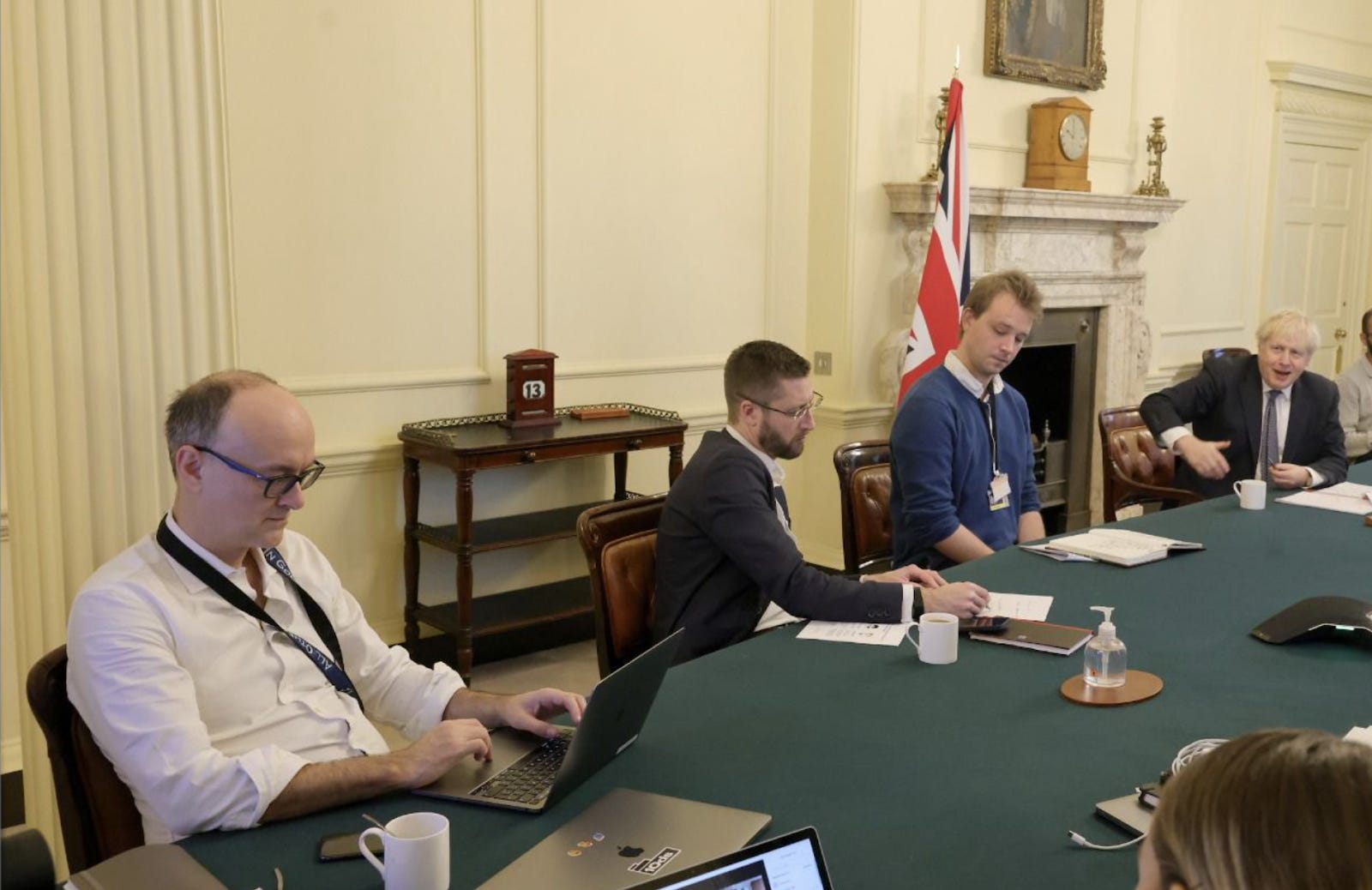
A day or so later (Friday 13th November 2020), the PM again asked in the cabinet room weekly COVID meeting where the COVID pass issue stood, and was again told it was a long way off. I decided at that point to simply show the PM what the Royal Mint had given us, proving that again the system was taking weeks/months to do what could be achieved in a day or two and that we could move much faster. The cabinet secretary then wrote to me ‘we could use this for Vaccine status too?’ Indeed. Two birds, one stone. (there is a photo of this moment below)
Unfortunately, I don’t have the clear photo of the ‘COVID pass’ they made, but I do have a blurry screen grab from a video I took of them explaining it to us (which I took to show to the Prime Minister later):

Sorry again for poor picture quality, but you get the idea.
This is just one of many, many, many examples of ‘ad hoc processes’ being much faster and more effective than the official Victorian hierarchical system.
To conclude this section…. We need to understand how the policy of: ‘reach herd immunity by getting most of the country infected with a novel pathogen’ was official DHSC policy agreed years in advance by the most senior health officials, but ‘lets mimic herd immunity without the death toll by flooding the country with tests which will have the same effect of breaking enough transmission events to get R below 1’ was regarded as some kind of high risk idea for many months and blocked - by some of the same people. In one case you break transmission chains by literally having people catch a novel virus and acquire immunity, in the latter you do it with a quick swab and isolate them if they are positive whilst waiting for a vaccine. I also do not know how locking everyone down half a year is considered a less damaging public health intervention than the rapid testing one….
More later on the rapid testing program and how we could have pursued a radically different approach.
What is to be done? We need a systemic risks taskforce, starting with pandemic biosecurity
What to do? For the cost of the inquiry we could set up a serious effort to meaningfully improve UK readiness. Every hour and pound the state spends looking for political scapegoats using 19th-century legal tools is an hour it is not building the shield we need for the 21st century threat space.
Here I will:
Point to an example of a starting point of the kind of doctrine we need (the Esvelt Delay, Detect, Defend paper)
Provide extracts on a paper by William Hague and Tony Blair that I contributed to on these issues in early 2024.
Outline some additional thoughts on how to go about the pandemic biosecurity taskforce we recommended the creation of.
I ended a blog last year by encouraging people to read a Geneva Security Studies paper by MIT Professor Kevin Esvelt called “Delay, detect, defend: Preparing for a Future in which Thousands Can Release New Pandemics”. Esvelt is an Oppenheimer-type figure, a first rate synthetic biologist who helped pioneer gene drives, and who has since pivoted to addressing the severe risks posed by biotech advances. I and others tried to get the type of thinking present in that paper going when we were in government but obviously we failed (I wrote a piece for the Cabinet Secretary at the end of December 2020 warning about much of this and advocating for some of these steps).
The Esvelt paper maps the actual core parts of a crisis response to a new pathogen release. It outlines the systems & capabilities that would be needed, on what timescales. It outlines which areas need research to be done, which areas exist, and what new capabilities must be built (such as manufacturing). It does this through the whole pipeline of reducing the likelihood of pathogen emergence/release (delay), through enhancing the detection of events (detect), to then the surge capabilities needed when said detection occurs (including surging of rapid mass testing, passive defence like UV/air filtration, and new PPE measures). Delay, detect, defend.
Substantial parts of this were a core part of papers and conversations in 2020 to try to prepare for winter: rapid testing, air filtration, UV, viricidal sprays, new approaches to PPE. Only rapid testing happened, and too late.
Of relevance, Esvelt goes into depth in the need for a rapid ability to manufacture large numbers of rapid tests for a new pathogen - something we tried to lay the groundwork for in late 2020/2021 (a sustainable, on-shored mass testing manufacturing and deployment capability) but this was shut down early 2021. This would be a system akin to: “Alert: Novel pathogen detected at Heathrow, AI-guided affinity analysis indicates strong binding to human receptors, direct UK Bio-Defend to manufacture 100,000 tests against this and contact logistic partners to immediately post this to all potential contacts through Heathrow, prepare specific contact tracing, allocate resources for vaccine prototype.”
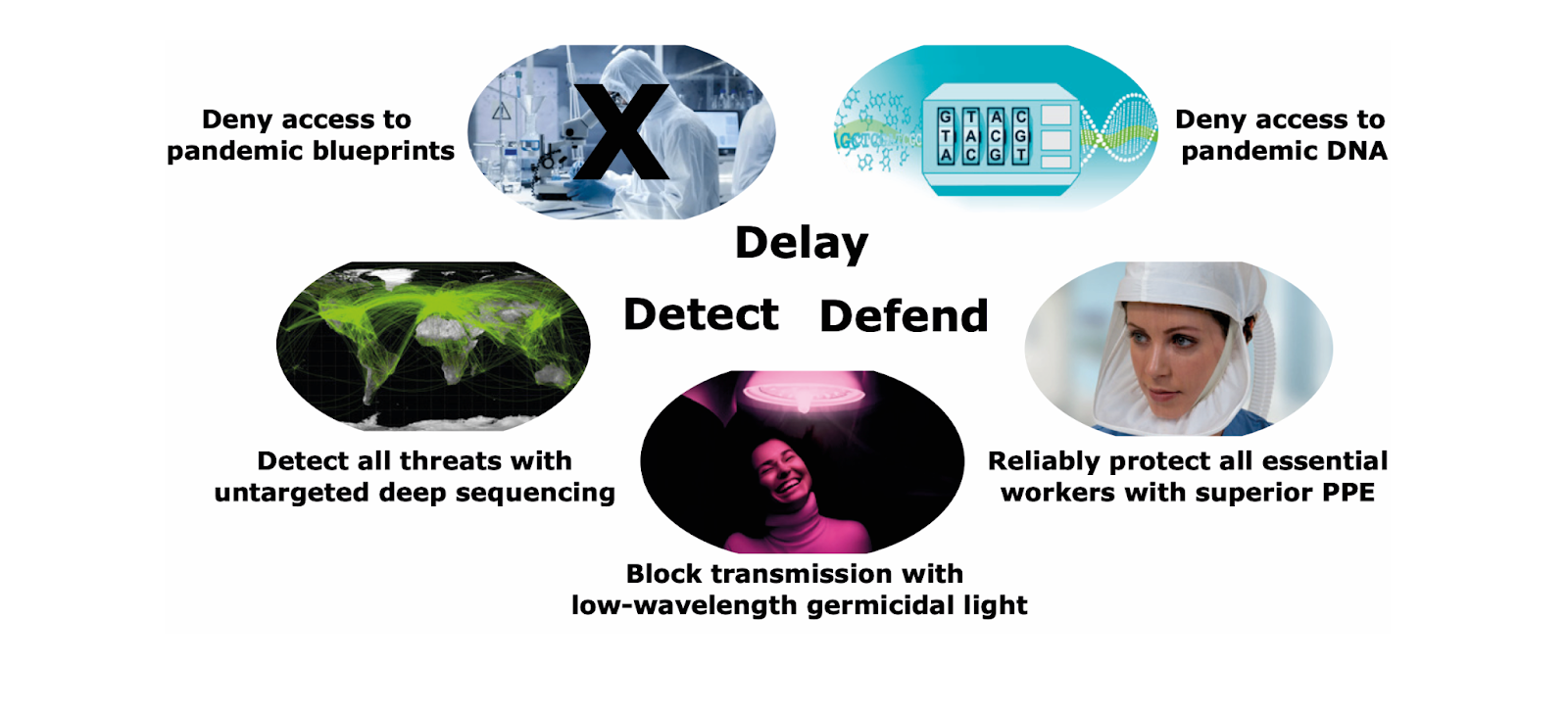
Figure 3 of Esvelt’s Delay-Detect-Defend
I highly recommend reading the Esvelt paper [link here again]. It’s mostly accessible to general readers. Note the venue of the Esvelt paper - a security journal, not a public health journal.
In late 2023/early 2024 I was worried enough about the trends and lack of action to delay other plans to work on a paper laying out some of what should be done, working with William Hague’s researcher Luke Stanley, who has an interest in biosecurity. The final section of the February 2024 Blair-Hague report on Biotech laid this out - see here “A New National Purpose: Leading the Biotech Revolution”.
It’s a long section, so below is a selection of the points made. All emphasis is added by me.
The section “highlights the importance of learning from the response to Covid-19 and mitigating the rising threat of pandemics.” The things we emphasize differ substantially from the inquiry report that has just come out (Nov 2025).
Firstly, we highlighted stasis and, politely, said the inquiry was inadequate for what needed to be done. “[T]he UK has not yet sufficiently altered its readiness since Covid-19; if a novel pandemic arose today, the UK and other nations would still be vulnerable. In many countries, leaders would be faced with a similar set of options to those that they faced in early 2020….. While it is important that a forensic legal analysis of the UK’s response to Covid-19 is conducted through the public inquiry, waiting on its conclusions to begin a reform programme will create too great a delay in making the country biosecure; given the time it would take to make the necessary changes after the inquiry concludes, well over a decade could pass between the emergence of Covid-19 emerging and the enactment of a credible reform plan.”
Second, we highlight that the threat space is worsening in this area, as bioweapon technology proliferates in part due to dual use advances. I’ll talk about this only at a high level.
The core issue is the risk of a pandemic is not static, but is increasing. Core biotech advances are inherently dual use (ie, AI making it much easier to make a protein that attaches to and kills cancer cells also make it easier to do much less desirable things). Zoonotic risks remain serious, whilst artificial risks are rising and becoming much easier for rogue actors to achieve. As Esvelt says in his paper, “Current trends suggest that within a decade, tens of thousands of skilled individuals will be able to access the information required for them to single-handedly cause new pandemics.”
We highlighted, at a high level, a range of risk factors, including the proliferation of what are effectively bioweapon ‘how to’ guides in the scientific literature, calling for action to stop this: “information directly relevant to creating pandemic agents is now routinely appearing in journals.” We advocated some strong measures to be brought in, similar to some of those the current US administration is implementing (or trying to implement).
Coincidentally, on the same day as that Blair-Hague report published (25th Jan 2024), two of the world’s leading Synthetic Biologists George Church and David Baker (who won the Nobel prize shortly after) wrote for Science ‘Protein design meets biosecurity’, highlighting some of the same issues. More recently, Microsoft has publicly stated that the existing proposed controls regime would fail and is already out of date - see “Microsoft says AI can create ‘zero days’ in biology” (we predicted and warned about this in 2021 whilst still in government). Dr Logan Graham, who was in our core Number Ten team and spent time on this in government, now leads the frontier red team on this line of work at Anthropic (see his interview with Anderson Cooper on US national news last week). This was a key unstated reason for the AI Security Institute.
During a recent gathering of AI Security professionals (including UK govt/frontier tech/former White House people), one said to me “the ship has already sailed on technology-side solutions for this” - ie, certain tech has irreversibly proliferated. This is a bigger failure than people realise (I won’t go into detail on how and why it failed).
Unfortunately UK systems have been behind the pace. I flagged these issues to Dominic Cummings in late summer 2020, and so he set up a meeting with security chiefs which he later told Dwarkesh Patel’s podcast about at a high level [video]:
“I organized a meeting on biosecurity in summer 2020 as well….. We asked various questions. I didn’t say that one of the people that I actually took to the meeting was themselves a brilliant young scientist.
But so all these people inside the system said, “Don’t worry about this, Dominic.” They’re like, “This will never happen. This is impossible. This is science fiction. Or this is like 10 years away, blah, blah, blah.” And everything was about trying to reassure me that I shouldn’t really worry about this.
And at the end of the meeting I said, “So James, what do you think about this?” And of course these people have no idea who he was. And his answer was, “Well, pretty much everything that everyone has said is impossible or like will take 10 years, I have personally done in the lab in the last two or three years.”
So. Now, does that mean that the whole system for biosecurity is, is, is a disaster? No. Does it mean that everyone involved in it is a nightmare? No. There are obviously brilliant people everywhere.
But across all of these things, there are budget horrors. There is a chronic inability to build long term. There are constant bureaucratic incentives not to face reality and face the truth.”
This obviously colours how I think about state competence in this space.
Back to the Blair-Hague report.
We then say that state capacity must be a central aspect of any attempt to learn from COVID - a topic largely avoided by the inquiry:
“The success of technology in managing pandemics is dependent on the effectiveness of the machinery of government implementing it. Covid-19 highlighted the need to reimagine the state’s role in shaping science and technology….. Some of the most exceptional UK achievements since the second world war were made during the pandemic, such as the rapid formation and actioning of the Vaccine Taskforce, and it is important that this momentum be both formalised in improved plans for the next pandemic and generalised across the system……The most successful world-leading programmes of Covid-19 – the vaccines taskforce and the RECOVERY trial – were achieved outside the normal mechanisms of government operation. Therein lie vital lessons.”
We then, relatedly, argue that pandemic preparation needs to move to the national security space. This is the kind of ‘major strategic decision’ the inquiry is entirely ignoring.
“The UK should move from narrowly viewing pandemics as a public-health issue to acknowledging that they are a much broader national-security issue, which means bringing a wider range of perspectives and skills to bear on the challenge of preparing for and confronting them…… In 2020 the government recognised the importance of reforming its approach to pandemics and replaced Public Health England with the UK Health Security Agency (UKHSA). In early 2021 the Tony Blair Institute argued that what is now the UKHSA should be recreated as a “focused but nimble and high-quality organisation [specifically focused on pandemic prevention and serious infectious disease], more akin to a national-security service, and keep traditional public health as a separate entity”, with strong links to other crisis-response elements. This emphasised the need to address the UK’s vulnerability to pandemic threats in the short term.”
For generalist readers - the UK Health Security Agency referred to above was announced in 2020 to replace Public Health England after confidence was lost in the latter. As the name suggests, it already was meant to have more of a security focus. As we said:
“UKHSA’s senior organisational structure lacks a full-time point person on addressing the systemic national-security threat arising from our pandemic response weakness and technological trends, even at director level……. This indicates that UKHSA has lost some of its founding focus. There was always a risk that UKHSA would drift too much in the direction of being a like-for-like replacement of the organisation it was designed to replace, Public Health England, losing its focus on and prioritisation of the specific deficiencies exposed by Covid-19 and the need to treat pandemics as a security, not solely a health, threat. There is a danger that more regular public-health issues being rebranded as a security issue without clearly prioritising the most critical threats. This risk was part of the motivation for TBI’s 2021 recommendation that a clearer division between these national-security impacting and public-health roles exists in the machinery of government to ensure mission focus.”
Indeed, the first inquiry report advocated creation of a pandemic organisation - but missed the observation that one was already set up and failed to appoint a senior person to focus on pandemics. (Isn’t “the PM pulled the ‘setup a pandemic prevention agency and it has lost the plot within 2.5 years” relevant to the inquiry?) Challenge: can you find a document like Esvelt’s produced by the UK Public Health bureaucracy in the last decade/ever?
We then recommended an organisational restructuring of UKSHA:
“The UK Health Security Agency must undergo restructuring, along with strategic reprioritisation, to enable a strong focus on pandemic-response reform and biosecurity around potential pandemic pathogens. This should include an overarching focus on pandemics posing systemic consequences on the scale of Covid-19 (or greater) until credible plans have been made and withstood public scrutiny. This should also include a review of the UKHSA’s ownership in government and its ability to reach across Whitehall, to ensure it is truly prioritising based on the scale of any given security threat.”
The securitisation question is a big one and should in my opinion be front and center of a ‘lessons learnt’ exercise. In my opinion public health bureaucracies showed correlated failures throughout the west, and the kind of ‘security mindset’ advocated by Esvelt and others was much more appropriate . Further, the range of interventions required, such as closing schools and shutting a country down go far beyond public health measures. The scope of this brings it into the national security space.
In general terms, the ‘public health’ culture and mindset is optimised for dealing with obesity, vitamin deficiencies and seasonal flu, and is for good reason cautious - it waits for extensive peer reviewed studies before concluding anything. But in a pandemic you have a rapidly ticking clock. That culture is not optimised for the rapid decision making loops, action under high uncertainty, and major national scale interventions present and needed during a pandemic (such a lockdown and shutting schools). See this page of Jeremy Farrar’s book for a related point on speed of action early in the pandemic (in my observation this remained an issue throughout), as well as pg7/8 of his inquiry written evidence agreeing about a ‘troubling lack of urgency’ in the early days.
Maybe I’m right, maybe I’m wrong in these conclusions. But I don’t think it’s controversial that his issue should be front and center of a serious ‘core governance’ analysis: who actually is in charge of pandemic preparation and response, and which mindset is most appropriate?
Back to our original question, ‘what is to be done?’ The above issues and others led us to advise a dedicated taskforce:
“Recommendation: The UK needs to pursue a focused and urgent mission inside government that would result in a coherent, integrated plan for addressing the UK’s systemic vulnerability to pandemics, which should be deemed a national-security issue . The government cannot wait for the conclusions of the inquiry to begin addressing the well documented failings around the pandemic, before then building on its world-leading successes to make them business as usual.
Within the next 18 months, the government should publish initial preparation documents (including costed options and a plan to enable them) for responding to a new pandemic. Wherever possible, the documents released for public scrutiny should be those that will be presented to ministers when the relevant plans are activated (with redactions for genuinely sensitive information). These documents should then be iteratively improved and published annually, based on feedback and changing circumstances. They should be published freely without veto power from other government departments; for example, the Treasury should not be allowed to censor cost estimates and options.”
“Recommendation:
As part of this, UKHSA should quickly assemble a taskforce-like structure to deliver on the need for a rapid reform programme.
Recommendation: The UK Health Security Agency should create a Biosecurity Taskforce, led by an external figure appointed with a direct reporting line to a senior cabinet minister. Effort should be focused on identifying and delivering a policy framework to prevent a repeat of what happened in 2020.
Identifying and publishing the successful elements of the standout parts of the UK’s Covid-19 response will be key. The taskforce should take ownership of existing UKHSA roles here, such as its interaction with the 100 Days Mission. To achieve this it will need a small team made up of members with a range of skills, including but not limited to medical experts, data scientists, technical generalists and biotechnologists (as well as those with experience of crisis management and biosecurity). It will need the ability to quickly and flexibly hire outside of usual civil-service recruitment and pay processes.”
It should in part resemble the AI Security Institute (but with fewer generalist officials), which has actually been world leading (evidence: US, China, and many other countries have all created similar since AISI was created). I’d suggest having it led by a former special forces leader, who in my experience have good insight into the intersection of technology and effective action, with someone like Kevin Esvelt acting as Chief Scientist.
It would combine:
An investigation into what happened in 2020, talking candidly in private to people to build up a map of where the critical issues and trade offs are. This would be much more informal than the inquiry testimony process - the function here is not to assign blame but to hear frankly what issues people faced during the pandemic. In my experience people are a lot more candid in private than they are in their inquiry testimony. This would be a lot more cost effective than giving every witness a legal team, and be a lot more effective in general.
Development of a doctrine to deal with pandemics, including analysing international successes - akin to delay, detect, defend. It would also examine how this doctrine may conflict with current legal structures (for example, exploring what legislative changes/emergency carve outs are needed on issues like GDPR, procurement, judicial review).
Scrutinising and improving the actual state of UK capability that would support that doctrine. This would include running simulations of different scenarios, and examining how current UK capability would respond (how long would it take to get vaccines? What is our ability to scale testing rapidly? This would also include directly funding research programs into key areas (such as new PPE, testing approaches).
The PM simply sending a letter to the bureaucracy asking for this to be set up will not deliver it - it will quickly get subsumed into the old ways.
Such an approach should then be generalised to other risks, including issues like Solar Flares which could cripple the power grid for months, and for the plans are also effectively nonexistent (at least as of 2021)…….. We must not get stuck ‘fighting the last war’.
To close…
I will cover rapid testing specifics in the next post.
I leave you with the choice Pentagon reformer and fighter pilot John Boyd famously posed to his young fighter pilots. It is a choice the Inquiry staff—and the British state—must now face:
“Tiger, one day you will come to a fork in the road and you’re going to have to make a decision about which direction you want to go. He raised his hand and pointed. “If you go that way you can be somebody. You will have to make compromises and you will have to turn your back on your friends. But you will be a member of the club and you will get promoted and you will get good assignments.” Then Boyd raised his other hand and pointed in another direction. “Or you can go that way and you can do something- something for your country and for your Air Force and for yourself. If you decide you want to do something, you may not get promoted and you may not get the good assignments and you certainly will not be a favorite of your superiors. But you won’t have to compromise yourself. You will be true to your friends and to yourself. And your work might make a difference. To be somebody or to do something. In life there is often a roll call. That’s when you will have to make a decision. To be or to do? Which way will you go?”